
Architecture Education Must Prepare for 25-Year Future
Sneha Reddy
Australia & New Zealand Specialist
The landscape of architectural education is undergoing profound transformation. As institutions worldwide grapple with climate urgency and rapid technological advancement, schools are fundamentally rethinking what knowledge matters most for tomorrow's architects. This shift extends beyond traditional curriculum updates—it represents a philosophical reorientation toward problem-solving at unprecedented scales.
Redefining Architectural Pedagogy
Leading architecture schools are moving beyond celebrating experimentation for its own sake. Instead, educators are asking critical questions about which competencies will remain relevant across the next quarter-century. The focus is shifting toward systems thinking, sustainability integration, and adaptive design methodologies that address real-world challenges including environmental preservation, digital innovation, and social equity. This represents a departure from purely artistic exploration toward outcome-driven learning that prepares professionals for measurable impact.
What This Means for Students and Educators
🎓 Ready to Study Abroad?
Get free personalised guidance — loans, scholarships, admissions. No fees, ever.
Students entering architectural programs today face a different educational contract than previous generations. Rather than mastering static design principles, they're learning to operate within complex, interconnected systems. This includes understanding climate science, parametric design tools, material science, and community engagement frameworks. Educators, meanwhile, must balance preserving design creativity with developing practical competencies in emerging technologies and environmental responsibility.
The professional landscape has simultaneously become more uncertain, with traditional architectural career paths diversifying into urban planning, climate adaptation consulting, and digital design specialization. Schools must therefore prepare graduates for fluid career trajectories rather than linear professional progressions.
Strategic Directions for Architectural Schools
Forward-thinking institutions are restructuring curricula around interdisciplinary collaboration, bringing together architecture students with engineers, urban planners, and environmental scientists. Hands-on projects increasingly address real-world problems—from affordable housing design to resilient infrastructure—rather than abstract theoretical exercises. Technology integration has also accelerated, with schools embedding AI literacy, virtual reality design tools, and advanced computational methods into core coursework.
Furthermore, schools recognize that architecture education must expand its social consciousness. Students need understanding of community needs assessment, equitable design principles, and the ethical dimensions of building decisions that affect vulnerable populations.
Looking Ahead for Architecture Education
The coming years will likely see further specialization within architectural programs, with schools developing distinct identities around sustainability, digital innovation, or social practice. Partnerships with professional firms, research institutions, and municipalities will deepen, creating more internship and apprenticeship opportunities that bridge education and practice.
As Winka Dubbeldam's leadership at SCI-Arc and similar initiatives demonstrate, architecture education stands at an inflection point. The question now becomes: are your educational choices preparing you for the problems your generation will actually inherit?
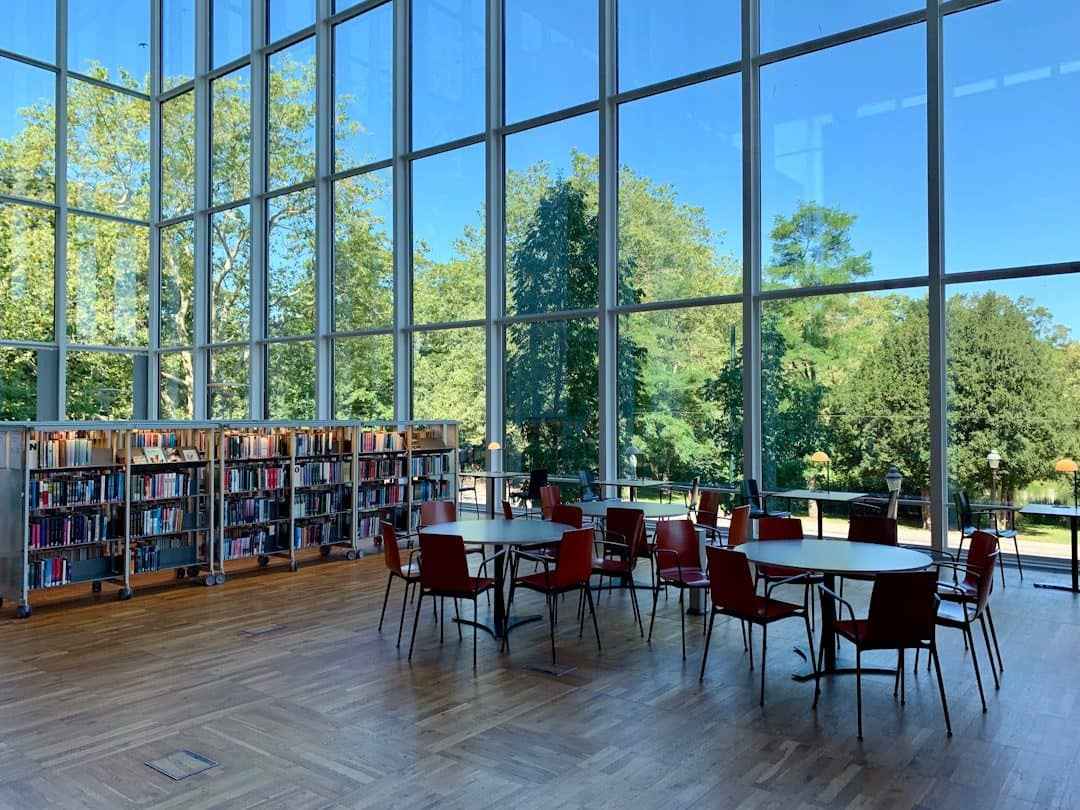
Photo by Drahomír Hugo Posteby-Mach on Unsplash
Amazon Associate Recommendation
📦 Study Abroad Guides
Comprehensive study abroad preparation guides for Indian students.
Shop on Amazon.in →Disclosure: As an Amazon Associate, EduDhruv earns a small commission from qualifying purchases. This helps keep our guidance free for students — at no extra cost to you.
Australia & New Zealand Specialist
Sneha studied at the University of Melbourne and has placed 400+ Indian students into Australian and NZ universities. Expert on Subclass 500 visas and Australian PR pathways.
⭐ Rate this Article
Be the first to rate!
Login → to rate and join the discussion.
Sponsored

Related Articles

Federal Complaint Challenges NEA Over Jewish Member Discrimination
A civil rights complaint alleges the National Education Association discriminated against Jewish members and created hostile environments. Learn what this means for educators.

Nvidia Billionaire Pledges $200M to USC for AI Research
Mark Stevens donates $200 million to USC for artificial intelligence research and education. Learn how this transformative gift shapes the future of AI learning.

AI in Education: Why Human Connection Still Matters
Explore why schools must balance AI technology adoption with essential human interaction. Learn how to preserve meaningful teaching in the age of automation.
💬 Discussion (0)
Sponsored
