
MIT PhD Full Funding 2027: Complete Guide for Indian Students
Ananya Kapoor
Scholarship Specialist
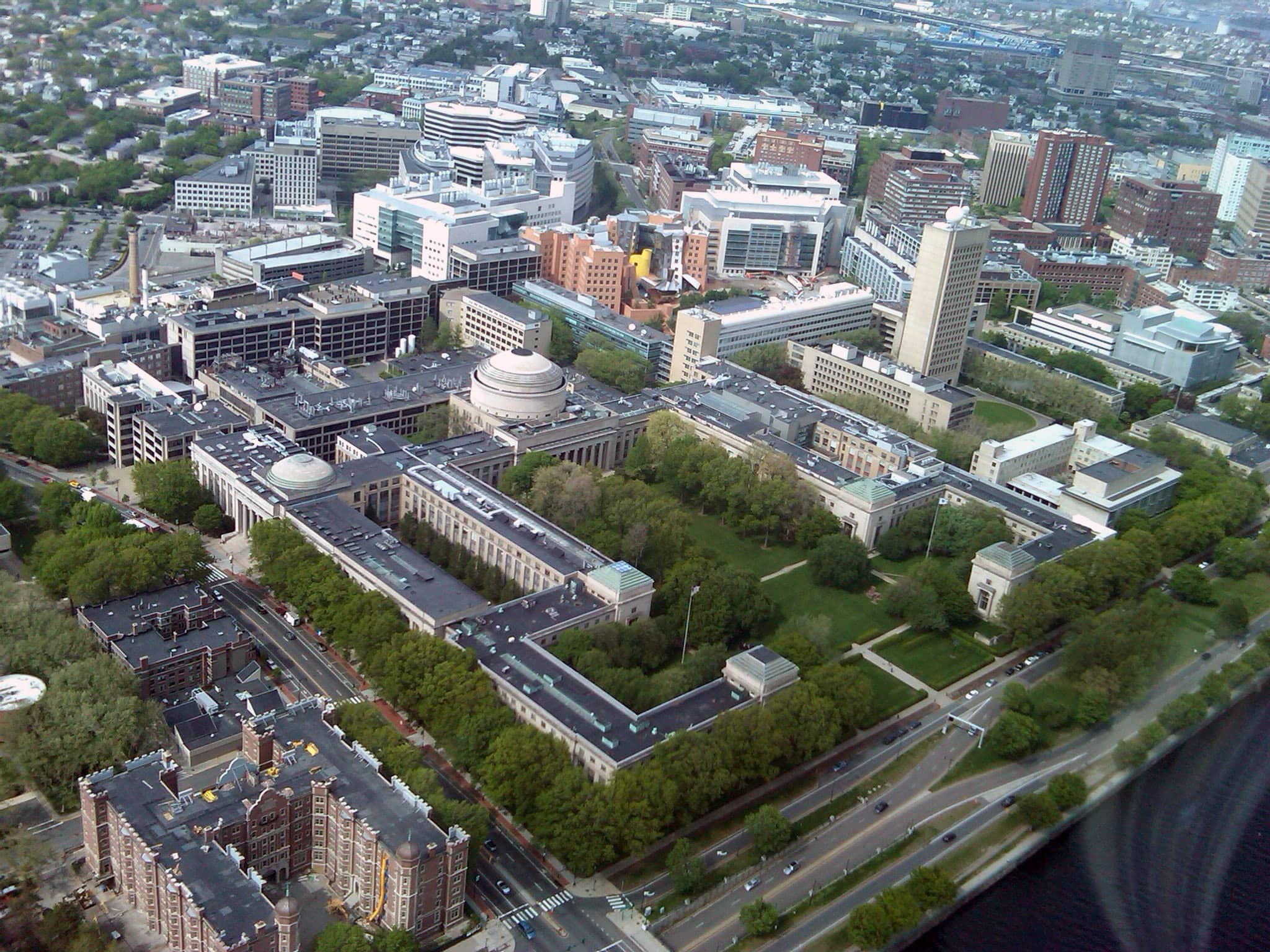
The Massachusetts Institute of Technology (MIT) stands as the world's #1 ranked university, and for aspiring doctoral students from India, there's exceptional news: every admitted PhD student receives 100% funding covering tuition, living expenses, and health insurance for up to 5 years. For Fall 2027 admission, MIT is offering comprehensive financial support worth ₹46-52 lakh annually across all PhD programs including Computer Science, AI, Data Science, Physics, Engineering, and more.
Unlike many universities that offer partial funding or require students to self-fund their Master's degrees, MIT guarantees full financial support to all PhD students in good academic standing—regardless of citizenship. Indian students are evaluated on the same need-blind basis as domestic applicants, making this one of the most accessible pathways to world-class doctoral education. The application deadline for Fall 2027 intake is December 1, 2026.
📊 Quick Facts
| University | Massachusetts Institute of Technology |
| Country | USA |
| Coverage | Full tuition ($61,990/year) + monthly stipend ($4,100-$4,650/month) + 12-month health insurance ($3,600/year) |
| Amount | $55,000 - $62,000 USD per year (₹46,00,000 - ₹52,00,000 per year) |
| Deadline | 2026-12-01 |
| Intake | Fall 2027 |
| Courses | PhD Computer Science (EECS), PhD Data Science, PhD Artificial Intelligence, PhD Electrical Engineering, PhD Physics, PhD Chemistry, PhD Economics, PhD Biology, PhD Mechanical Engineering, PhD Materials Science |
| Official link | View on Massachusetts Institute of Technology website → |
Overview of MIT PhD Full Funding Program
The MIT PhD Full Funding Program is not a single named scholarship—rather, it's MIT's institutional commitment to fund every admitted doctoral student through a combination of Research Assistantships (RAs), Teaching Assistantships (TAs), and competitive fellowships. This funding model is decentralized, meaning each of MIT's 50+ PhD programs across its five schools manages its own funding, but the outcome is the same: full financial support for 5 years.
MIT doctoral programs cover fields ranging from Electrical Engineering & Computer Science (EECS) to Physics, Chemistry, Economics, Biology, Materials Science, and Computational Science & Engineering. The EECS department alone enrolls around 700 PhD students, making it one of the largest and most competitive programs globally. For the 2024-2025 academic year, doctoral stipends ranged from approximately $49,600 to $55,800 annually, with full tuition coverage valued at $61,990 per year.
This funding applies automatically upon admission—there is no separate scholarship application. Indian students who are admitted to MIT PhD programs are guaranteed the same funding package as U.S. citizens, covering tuition, monthly stipend, and health insurance from day one through degree completion (typically 5-6 years).
What's Covered Under MIT PhD Funding
🎓 Ready to Study Abroad?
Get free personalised guidance — loans, scholarships, admissions. No fees, ever.
MIT's PhD funding package is one of the most comprehensive in the world. Here's exactly what Indian students receive:
1. Full Tuition Waiver
MIT covers 100% of your PhD tuition, valued at $61,990 per academic year (₹51.8 lakh). This applies every year you're enrolled in the doctoral program, as long as you maintain good academic standing. You will never see a tuition bill.
2. Monthly Living Stipend
All PhD students receive a monthly stipend to cover living expenses in Cambridge, Massachusetts. For 2025-2026, stipend rates are:
- Research Assistants (RA): $4,269/month (~₹3.57 lakh/month or ₹42.8 lakh/year for 12 months)
- Teaching Assistants (TA): $4,369/month (~₹3.65 lakh/month or ₹43.8 lakh/year)
- Fellowship Recipients: $4,134 - $4,654/month depending on the department and fellowship type
Most MIT PhD students are funded on 12-month appointments, meaning you receive a stipend throughout the year, including summer. First-year students typically receive fellowship support, while continuing students are funded through RAs or TAs tied to their research advisor's grants.
3. Health Insurance
MIT provides comprehensive health insurance coverage for all PhD students, valued at approximately $3,603 per year. This includes the MIT Student Health Insurance Plan (MIT SHIP) covering medical, dental, and mental health services at MIT Medical and partner hospitals. International students must maintain this coverage for visa compliance.
4. Additional Benefits
- Parental Support Grants: Students with dependent children receive additional financial assistance
- Conference Travel Funding: Many departments provide travel grants for presenting research at conferences
- Laptop/Equipment: Some departments provide laptops or research equipment stipends
- Summer Research Support: Supplemental summer RA or fellowship funding in addition to the academic-year stipend
- Dissertation Fellowships: Competitive fellowships in years 4-5 that free students from TA/RA duties to focus solely on thesis completion
Total Package Value
When you combine tuition, stipend, and health insurance, the total value of MIT PhD funding is approximately:
- USD: $114,000 - $120,000 per year
- INR: ₹95 lakh - ₹1 crore per year (at current exchange rates)
- Over 5 years: ₹4.75 - 5 crore total value
Eligibility for Indian Students
MIT PhD programs are open to Indian students on the same competitive basis as domestic applicants. Here are the detailed eligibility criteria:
Academic Qualifications
- Bachelor's Degree Required: You must have completed (or be completing) a 4-year Bachelor's degree in a relevant STEM field by the time you start at MIT (September 2027). Indian students with 3-year Bachelor's degrees should ideally have a Master's degree as well, though exceptional candidates with strong research backgrounds may still be considered.
- Master's Degree NOT Required: Unlike many programs, you do not need a Master's degree to apply for MIT PhD. All PhD students earn a Master's degree along the way to their doctorate.
- Strong Academic Record: Competitive applicants typically have a CGPA of 8.5+/10 or equivalent. MIT looks for depth of understanding in mathematics, physics, computer science, or your core discipline.
- Research Experience: Prior research experience is highly valued—undergraduate research projects, internships at research labs (IITs, IISc, TIFR, etc.), publications, or conference presentations significantly strengthen your application.
English Language Proficiency
Indian students whose native language is not English, or who did not complete their entire education in English, must submit one of the following test scores:
- TOEFL iBT: Minimum score of 90 (most departments prefer 100+). MIT institution code: 3514
- IELTS Academic: Minimum score of 7.0 overall
- Duolingo English Test: Accepted by some departments (check individual program requirements)
- Cambridge English Qualification: C1 Advanced or C2 Proficiency
Waiver Available: If you completed your Bachelor's and secondary education entirely in English at an institution where English is the sole medium of instruction, you may request a waiver.
Standardized Tests
- GRE General Test: OPTIONAL for most MIT PhD programs starting with Fall 2027 admissions, including EECS, Physics, Chemistry, and many engineering departments. If you choose to submit GRE scores, competitive applicants typically score 320+ (160+ Quant, 155+ Verbal) with a strong Analytical Writing score (4.5+).
- GRE Subject Test: Optional but recommended for Physics applicants
Citizenship and Visa
Indian citizens are fully eligible to apply. If admitted, you will receive an I-20 form from MIT to apply for an F-1 student visa. MIT's funding package qualifies as financial support documentation for your visa application.
Work Authorization
To receive RA or TA funding, you must be eligible to work in the United States. F-1 visa holders are permitted to work on-campus (which includes RA/TA positions) for up to 20 hours/week during the semester and full-time during breaks.
Application Process for Fall 2027
Applying to MIT PhD programs is a department-specific process. Here's your step-by-step roadmap:
Step 1: Identify Your Program and Faculty (June - August 2026)
MIT offers over 50 PhD programs across five schools. Indian students most commonly apply to:
- Electrical Engineering & Computer Science (EECS) — for AI, ML, Computer Science, Robotics
- Computational Science & Engineering (CSE) — for interdisciplinary computational research
- Physics, Chemistry, Biology
- Mechanical Engineering, Materials Science, Aeronautics & Astronautics
- Economics, Management Science (MIT Sloan)
Research faculty members in your area of interest. Reach out to 2-3 professors whose work aligns with yours—mention specific papers and explain how your research interests fit. While not required, this can significantly boost your application.
Step 2: Prepare Application Materials (July - November 2026)
- Statement of Purpose (SOP): 2 pages explaining your research interests, why you want a PhD, what you want to study at MIT, and why you're a good fit. Tailor this to each department.
- Academic & Intellectual Journey Essay: Some departments (like EECS) ask for a personal narrative about your academic path.
- Transcripts: Upload unofficial copies of all university transcripts. If admitted, you'll submit official copies.
- Resume/CV: 1-2 pages highlighting research experience, publications, internships, projects, awards.
- Letters of Recommendation: 3-4 letters from professors or research supervisors who can speak to your research potential. Academic letters are strongly preferred.
- GRE Scores (optional): If submitting, send official scores to MIT (code 3514)
- TOEFL/IELTS Scores: Official scores required (unless waived)
Step 3: Submit Online Application (September 15 - December 1, 2026)
Most MIT PhD applications open on September 15, 2026. You'll apply through the MIT Application Management portal at apply.mit.edu or department-specific portals (EECS uses GradApply).
Application Fee: $75 USD per program. Fee waivers are available for eligible applicants—apply for a waiver after starting your application if you meet financial need criteria.
Deadline: December 1, 2026, 11:59 PM EST for most programs (some like Linguistics have Dec 15 deadlines). All materials—including letters of recommendation and test scores—must be received by this date. Applications are reviewed holistically after the deadline.
Step 4: Interviews and Decisions (January - March 2027)
Shortlisted candidates are invited for interviews between January and March 2027. Some departments conduct video interviews, while others (especially for top candidates) may invite you to campus visit days (travel often funded by MIT).
Admission decisions are typically released in mid-to-late March 2027. Admitted students receive funding offers alongside their admission letters. Per the Council of Graduate Schools (CGS) April 15 Resolution, you have until at least April 15, 2027 to accept or decline your offer.
Step 5: Visa Application and Enrollment (April - August 2027)
Once you accept MIT's offer, you'll receive your I-20 form to apply for an F-1 student visa at the U.S. Embassy/Consulate in India. Bring your admission letter and funding documentation to your visa interview. Orientation begins in late August 2027, with classes starting after Labor Day in early September.
Required Documents
Here's a complete checklist of documents you'll need:
Academic Documents
- Unofficial transcripts from all universities attended (upload as PDFs)
- Mark sheets for all semesters (Indian students: upload semester-wise mark sheets and degree certificate if graduated)
- Degree certificate or provisional certificate
- If transcripts are not in English, provide certified English translations
Test Scores
- TOEFL or IELTS official score report (sent electronically to MIT, code 3514)
- GRE General Test scores (optional; if submitting, send to MIT code 3514)
- GRE Subject Test scores (optional for most programs)
Letters of Recommendation
- 3-4 letters from professors, research advisors, or academic supervisors
- Recommenders upload letters directly through the application portal
- Choose recommenders who know your research abilities well—quality over seniority
Written Statements
- Statement of Purpose: Typically 2 pages, double-spaced. Explain your research interests, why you want a PhD, what you want to study at MIT, which faculty you'd like to work with, and how your background prepares you.
- Personal Statement/Academic Journey (if required): Some programs ask for a narrative about your path to graduate school, challenges overcome, and unique perspectives you bring.
Other Materials
- Resume/CV: 1-2 pages maximum, highlighting research projects, publications, internships, relevant coursework, technical skills, and awards
- Writing Sample (for some programs): Research papers, theses, or technical reports demonstrating your scholarly ability
- Portfolio (optional): For some interdisciplinary programs, you may include links to GitHub repos, published code, or project demos
Selection Criteria
MIT evaluates PhD applications holistically. Here's what matters most:
1. Research Fit and Potential (40%)
Does your research interest align with faculty expertise? MIT wants students who will thrive in their research groups. Your SOP should clearly articulate what you want to research and why MIT is the right place. Demonstrate familiarity with faculty publications.
2. Academic Preparation (30%)
Do you have the technical foundation to succeed? Strong performance in core STEM coursework (especially math, physics, and your discipline) is essential. MIT looks for depth, not just breadth—evidence of rigorous coursework and strong grades in advanced subjects.
3. Research Experience (20%)
Have you done research before? Publications, conference presentations, undergraduate thesis, research internships at top Indian institutions (IITs, IISc, TIFR), or industry R&D experience all count. Quality and depth of involvement matter more than quantity.
4. Letters of Recommendation (10%)
What do your mentors say about your research potential? Strong, detailed letters from professors who supervised your research projects carry the most weight. Generic letters from famous professors who don't know you well help less.
Important Notes:
- GRE is now optional: With many programs waiving GRE requirements, the focus has shifted even more to research experience and fit.
- No quota system: MIT does not have country quotas. Indian students compete in the same pool as all international applicants.
- Funding is guaranteed: Unlike some universities where admission and funding are separate, at MIT admission = funding. You don't need to separately compete for assistantships.
Tips for Indian Applicants
1. Start Early and Build Research Experience
If you're still an undergraduate, prioritize research internships during summer breaks. Programs like IAS Summer Research Fellowship, IISER summer programs, or research internships at IITs significantly strengthen your profile. If you're already graduated, consider a research assistant position at an Indian research institute before applying.
2. Tailor Your SOP to Each Program
Don't send generic SOPs. Research faculty in your target department, read their recent papers, and explain specifically why you want to work with them. Mention 2-3 faculty whose work aligns with your interests. Show you understand what makes MIT unique for your research area.
3. Get Strong Letters of Recommendation
One strong letter from a professor who supervised your year-long undergraduate thesis is worth more than three generic letters from famous faculty who barely know you. Choose recommenders who can provide specific examples of your research abilities, problem-solving skills, and intellectual curiosity.
4. Prepare for the TOEFL Early
Many Indian students underestimate the speaking and writing sections. Aim for 100+ on TOEFL iBT or 7.5+ on IELTS to be competitive. Register early (September/October 2026) to allow time for retakes if needed.
5. Highlight Indian Context in Your Application
MIT values diversity. If your research interests relate to problems relevant to India (e.g., sustainable energy for developing countries, affordable healthcare technology, agricultural AI), emphasize this unique perspective. Don't just copy Western research agendas—show how your background gives you unique insights.
6. Don't Wait for Perfect Qualifications
You don't need publications in top-tier journals to get into MIT. Solid research experience, even if unpublished, combined with strong letters and a clear research vision can be enough. Many admitted students have 0-1 publications.
7. Reach Out to Current Indian Students
Connect with current MIT PhD students from India via LinkedIn. They can provide invaluable insights into the application process, what worked for them, and what life is like as an Indian student at MIT. Most are happy to help.
8. Consider the Cost of Living
While MIT's stipend (~$50,000-55,000/year) is generous by PhD standards, Cambridge, MA is expensive. Budget approximately $1,500-2,000/month for rent (shared apartment), $400-500 for food, and $200 for other expenses. Many students live in MIT graduate housing (Sidney-Pacific, Ashdown House) for convenience.
9. Apply to Fee Waivers
If the $75 application fee is a financial burden, apply for a fee waiver through the application portal. MIT offers waivers to eligible applicants. Don't let the fee deter you from applying.
10. Apply to Multiple Programs
MIT PhD acceptance rates are typically 3-8% depending on the department (EECS is around 5%). Even exceptionally qualified candidates face uncertainty. Apply to 8-12 PhD programs, including MIT, Stanford, Berkeley, CMU, and other top programs, to maximize your chances of admission with full funding.
Frequently Asked Questions
Do I need a Master's degree to apply for MIT PhD?
No, you do not need a Master's degree to apply for MIT PhD programs. Most admitted students come straight from Bachelor's programs. All PhD students earn a Master's degree along the way to their doctorate (typically after 2 years). If you already have a Master's degree, you can skip MIT's Master's requirements and proceed directly to PhD qualifying exams.
Can Indian students with 3-year Bachelor's degrees apply?
MIT prefers 4-year Bachelor's degrees. Indian students with 3-year Bachelor's degrees should ideally complete a 2-year Master's degree (M.Sc., M.Tech., or equivalent) to be competitive. However, exceptional candidates with 3-year degrees and very strong research backgrounds may still be considered—contact your target department's admissions office to confirm.
Is the funding guaranteed for all 5 years?
Yes, funding is guaranteed for 5 years as long as you maintain good academic standing and make satisfactory progress toward your degree. Most students complete their PhD in 5-6 years. If you need a 6th year, you can request an extension with support from your advisor and department, which is typically approved for students making good progress.
What is the acceptance rate for Indian students?
MIT does not publish acceptance rates by nationality. Overall PhD acceptance rates vary by department—EECS is around 5%, Physics around 7%, and some smaller programs may be slightly higher. Indian applicants are evaluated in the same pool as all international applicants, with no country quotas or preferences.
Do I need to contact professors before applying?
It's not required, but it can help. A brief, thoughtful email to 1-2 faculty whose research aligns with yours can demonstrate genuine interest and help you understand if they're accepting students. Keep emails short: introduce yourself, mention specific papers of theirs you've read, explain your research interests, and ask if they're taking new PhD students. Don't send mass emails or overly long messages.
Can I work part-time while on a PhD at MIT?
Your RA or TA position is considered your "work"—these require up to 20 hours/week during the semester. F-1 visa regulations allow on-campus employment but restrict off-campus work. Most PhD students don't take additional jobs because the stipend is sufficient and research is time-intensive. However, some students do paid consulting or summer internships (with advisor approval).
How much does it cost to live in Cambridge, MA as a PhD student?
Budget approximately $2,000-2,500/month total. Rent for a shared apartment near MIT is $1,200-1,800/month, food costs $400-600/month, and other expenses (transportation, utilities, personal) add another $300-500/month. MIT's stipend of ~$4,200-4,600/month covers these expenses, though you won't save much. Many students live in MIT graduate housing, which is more affordable and convenient.
What happens if I don't have strong GRE scores?
Starting with Fall 2027 admissions, GRE is optional for most MIT PhD programs, including EECS, Chemistry, and Computational Science & Engineering. If your GRE scores are weak, simply don't submit them—your application won't be penalized. Focus instead on strengthening your research experience and letters of recommendation.
How competitive is MIT compared to other U.S. universities?
MIT is among the most selective PhD programs globally, with acceptance rates typically 3-8% depending on the field. It's comparable in selectivity to Stanford, Berkeley, Caltech, and Princeton. However, funding at MIT is more guaranteed—unlike some universities where only top admits get full funding, every MIT PhD admit receives full support.
Can I defer my MIT PhD admission?
MIT generally does not allow deferrals for PhD admissions. If you're admitted for Fall 2027 but cannot attend, you would need to decline the offer and reapply in a future year. Some departments may consider deferral requests for exceptional circumstances (medical, military service), but this is rare—contact your department's graduate office if you need to explore this.
How to Apply: Next Steps
Ready to pursue your PhD at MIT with full funding? Here's your action plan:
- Research Programs: Visit MIT's Graduate Programs directory to explore PhD options in your field.
- Identify Faculty: Browse department websites, read faculty publications, and identify 2-3 professors whose research aligns with yours.
- Prepare Documents: Start drafting your Statement of Purpose, update your CV, and identify recommenders by August 2026.
- Take Tests: Register for TOEFL/IELTS (if required) and take the test by October 2026 to allow time for score reporting.
- Apply Online: Applications open September 15, 2026. Apply through the MIT Application Management portal or department-specific sites.
- Submit by Deadline: Ensure all materials are submitted by December 1, 2026, 11:59 PM EST.
Official MIT PhD Admissions Information: https://oge.mit.edu/graduate-admissions/
EECS PhD Application (most popular for Indian students): https://www.eecs.mit.edu/academics/graduate-programs/admission-process/
MIT's PhD programs represent one of the best-funded, most prestigious opportunities for Indian students pursuing doctoral research. With 100% guaranteed funding, world-class faculty, and a collaborative research culture, MIT PhD students are positioned to become leaders in their fields. Start your application today and take the first step toward joining the global innovation hub in Cambridge, Massachusetts.
Amazon Associate Recommendation
📦 IELTS & Scholarship Prep Books
Best-selling IELTS and scholarship application guides — trusted by 10,000+ Indian students.
Shop on Amazon.in →Disclosure: As an Amazon Associate, EduDhruv earns a small commission from qualifying purchases. This helps keep our guidance free for students — at no extra cost to you.
How MIT PhD Full Funding Program compares
Quick side-by-side with other fully-funded options Indian students can apply to:
| Scholarship | University | Amount/yr | Deadline | Coverage |
|---|---|---|---|---|
| MIT PhD Full Funding ProgramYOU ARE HERE | 🇺🇸Massachusetts Institute of Techn… | ₹46,00,000 - ₹52,00,000 per year | 1 Dec 2026 | 100% |
| Carnegie Mellon University PhD Full Funding | 🇺🇸Carnegie Mellon University | ₹36,86,400 per year (stipend) + ₹49,77,840 tuition waiver + Health insurance = Total value ₹88,00,000+ per year | 9 Dec 2026 | 100% |
| Karsh International Scholars Program | 🇺🇸Duke University | ₹71,00,000 — ₹75,00,000 per year | 2 Jan 2027 | 100% |
| Northwestern University PhD Full Funding | 🇺🇸Northwestern University | ₹38,85,000 — ₹40,00,000 per year (including stipend ₹38,85,000 + tuition waiver worth ₹55,00,000 + health insurance) | 1 Dec 2026 | 100% |
💡 Tip: Indian students can apply to multiple 100%-funded scholarships in the same admission cycle. Compare deadlines and intakes carefully.
Scholarship Specialist
Ananya is a Chevening alumna and has been awarded the Commonwealth Scholarship. She mentors students applying to merit-based scholarships across UK, Australia and Europe.
⭐ Rate this Article
Be the first to rate!
Login → to rate and join the discussion.
Sponsored

Related Articles

Fully Funded MBBS Scholarships Abroad 2027: Complete Guide
Fully funded MBBS scholarships abroad are competitive but achievable for Indian students with strong academic records and NEET scores. Learn which countries offer complete funding and how to apply in 2027.

Scholarships for Indian Students in Australia 2027
Australia offers over ₹40 lakh in annual scholarships for Indian students through government programs, universities, and private foundations. Learn the top schemes with 2027 deadlines and eligibility criteria.

Fully Funded Scholarships for High School Students 2027
Fully funded scholarships cover tuition, accommodation, and living costs for high school students globally. Learn about the top 2027 programs, eligibility, and how to apply as an Indian student.
💬 Discussion (0)
Sponsored
