
NUS Research Scholarship 2027: Full Funding for Indian PhD Students
Ananya Kapoor
Scholarship Specialist
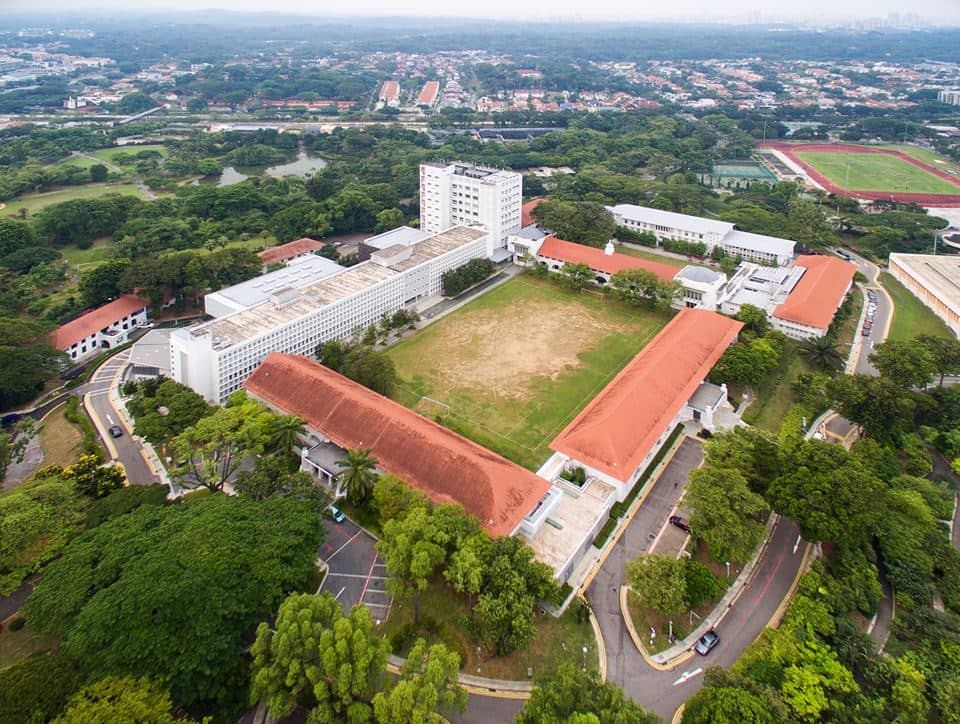
The NUS Research Scholarship 2027 is one of the most prestigious fully-funded graduate scholarships in Asia, offered by the National University of Singapore — the #8-ranked university globally (QS World Rankings 2026). This scholarship covers 100% of tuition fees and provides a generous monthly stipend of SGD 3,000 (~₹1.86 lakh/month) for PhD students and SGD 2,900 for Master's by Research students, making it a highly competitive alternative to US and UK PhD programs for Indian STEM graduates.
For Indian students aspiring to pursue world-class research in fields like Computing, Data Science, AI, Engineering, Biomedical Sciences, or Physical Sciences, the NUS Research Scholarship eliminates financial barriers and offers a clear pathway into Singapore's thriving research ecosystem. The application deadline for the January 2027 intake is August 1, 2026, and Indian citizens are fully eligible to apply. With no GRE requirement, English waiver for Indian university graduates, and automatic consideration upon admission application, this is your chance to join Asia's leading research university without the burden of student debt.
📊 Quick Facts
| University | National University of Singapore |
| Country | Singapore |
| Coverage | Full tuition waiver + monthly stipend (SGD 3,000 for PhD, SGD 2,900 for Master's) for up to 4 years (PhD) or 2 years (Master's) |
| Amount | SGD 36,000 per year (SGD 3,000/month for PhD; SGD 2,900/month for Master's) (₹21,60,000 — ₹22,32,000 per year (₹1,86,000/month stipend + full tuition waiver)) |
| Deadline | 2026-08-01 |
| Intake | January 2027 |
| Courses | PhD in Computing, PhD in Engineering, PhD in Science, Master's by Research in Computing, Master's by Research in Data Science, Master's by Research in Engineering, PhD in any discipline offered by NUS |
| Official link | View on National University of Singapore website → |
Overview of the NUS Research Scholarship 2027
The NUS Research Scholarship is awarded by the NUS Graduate School and individual faculties to outstanding graduate students pursuing full-time research degrees at the National University of Singapore. It is the university's flagship funding program for Master's by Research and PhD candidates across all disciplines.
Unlike coursework-based Master's programs (MSc, MBA), which typically do not offer full funding, the NUS Research Scholarship is exclusively for research-intensive programs where students work closely with faculty supervisors to conduct original research leading to a thesis or dissertation.
Key highlights:
- University: National University of Singapore (NUS) — ranked #8 globally in QS 2026, ahead of UCL, Caltech, and University of Hong Kong
- Scholarship type: Fully funded (tuition waiver + living stipend)
- Duration: Up to 4 years for PhD, up to 2 years for Master's by Research
- No bond required (however, recipients must sign a 3-year service obligation to work in Singapore after graduation to qualify for the MOE tuition subsidy — this is standard for all international students receiving government-subsidized education in Singapore)
- Application mode: Automatic consideration upon admission application (no separate scholarship form)
For Indian students, this scholarship represents a fully-funded pathway to a world-class research degree in one of Asia's most advanced academic and economic hubs, with zero tuition cost and a living stipend that covers accommodation, food, and daily expenses.
What's Covered Under the NUS Research Scholarship?
🎓 Ready to Study Abroad?
Get free personalised guidance — loans, scholarships, admissions. No fees, ever.
The NUS Research Scholarship provides comprehensive financial support, making it one of the most generous research funding packages in Asia:
1. Full Tuition Fee Waiver
100% of tuition fees are covered for the entire duration of your candidature (up to 4 years for PhD, 2 years for Master's). The standard tuition fee for international graduate research students at NUS is approximately SGD 40,000–45,000 per year (~₹24–27 lakh), which is fully waived under this scholarship.
2. Monthly Stipend
Recipients receive a tax-free monthly stipend to cover living expenses:
- PhD students: SGD 3,000 per month (~₹1,86,000/month or ₹22,32,000/year)
- Master's by Research students: SGD 2,900 per month (~₹1,79,700/month or ₹21,60,000/year)
Note: Stipend rates are effective from January 1, 2026. PhD students may be eligible for an additional stipend of up to SGD 500/month after passing the Qualifying Examination (QE), typically held 12–18 months into the program.
This stipend is sufficient to cover:
- On-campus or off-campus accommodation (SGD 500–800/month)
- Food and groceries (SGD 400–600/month)
- Transport and personal expenses (SGD 200–300/month)
- Health insurance and incidentals
3. Graduate Assistantship Programme (GAP)
International students on the NUS Research Scholarship are required to fulfill 312 hours of teaching or research assistance duties over the course of their candidature. This is a standard requirement and provides valuable teaching experience.
4. What's NOT Covered
- Airfare to Singapore (students must arrange their own travel)
- Visa and student pass fees (approximately SGD 90)
- Initial settling-in costs (accommodation deposit, etc.)
Total value for a 4-year PhD: SGD 144,000 in stipends + SGD 160,000+ in tuition = SGD 304,000+ (~₹1.88 crore)
Eligibility Criteria for Indian Students
The NUS Research Scholarship is open to all international students, including Indian citizens. There are no country-specific quotas or restrictions. Here's what you need to qualify:
1. Academic Qualifications
- For PhD applicants: A Bachelor's degree with at least Second Class Upper Honours or equivalent (typically 60–65% or 3.0/4.0 GPA from an Indian university). A relevant Master's degree can strengthen your application.
- For Master's by Research applicants: A Bachelor's degree with at least Second Class Upper Honours or equivalent in a relevant discipline.
Indian context: Graduates from IITs, NITs, BITS Pilani, top state universities, and central universities with strong academic records (First Class or Distinction) are highly competitive. If you have a CGPA of 7.5/10 or above, or percentage above 70%, you meet the academic threshold.
2. Admission to a Full-Time Graduate Research Programme
You must apply for and be offered admission to a full-time PhD or Master's by Research program at NUS. Popular research programs for Indian students include:
- Computer Science (AI, Machine Learning, Cybersecurity, Data Science)
- Electrical & Computer Engineering (Semiconductor, IoT, Robotics)
- Mechanical Engineering, Biomedical Engineering, Chemical Engineering
- Physics, Chemistry, Mathematics, Statistics
- Biomedical Sciences, Life Sciences
- Economics, Business Analytics, Public Policy (research-based)
3. English Language Proficiency
If your undergraduate degree was not taught in English, you must submit:
- TOEFL iBT: Minimum score of 85 (some faculties require 90+)
- IELTS (Academic): Minimum overall band of 6.0 (some faculties require 6.5+)
Good news for Indian students: If you completed your Bachelor's or Master's degree from an Indian university where English was the medium of instruction (IITs, NITs, most state/central universities), you do NOT need TOEFL or IELTS. You can submit a Medium of Instruction certificate from your university.
4. GRE Requirement
GRE is NOT mandatory for most NUS graduate research programs. However, strong GRE scores (especially Quantitative 165+) can strengthen your application, particularly for competitive programs like Computer Science or Engineering. If you already have GRE scores, submit them; if not, you can apply without them.
5. Research Proposal and Faculty Contact
Before applying, you should:
- Identify potential thesis advisors whose research interests align with yours
- Contact 2–3 faculty members via email with a brief introduction, CV, and research interests
- Prepare a 1–2 page research proposal outlining your intended area of study
Having a faculty member express interest in supervising your research significantly improves your chances of admission and scholarship award.
6. MOE Tuition Grant Eligibility
To receive the NUS Research Scholarship, you must be eligible for the Singapore Ministry of Education (MOE) Tuition Grant. This requires you to sign a 3-year service obligation to work for a Singapore-registered company after graduation. This is a standard requirement for all international graduate students receiving subsidized tuition in Singapore and is not a restrictive bond — you're free to choose your employer and job role, as long as it's in Singapore.
Application Process: Step-by-Step Guide
Applying for the NUS Research Scholarship is straightforward, as there is no separate scholarship application. You are automatically considered when you apply for admission to a graduate research program.
Step 1: Identify Your Research Area and Faculty Supervisor
Use the NUS "Find Thesis Advisors" tool or browse faculty profiles on departmental websites:
- School of Computing: www.comp.nus.edu.sg
- College of Design and Engineering: cde.nus.edu.sg
- Faculty of Science: www.science.nus.edu.sg
Contact 2–3 faculty members whose research matches your interests. Send a concise email (max 250 words) with:
- Subject line: "Prospective PhD Student — [Your Research Interest]"
- Brief introduction and academic background
- Why their research interests you
- Attach your CV
Step 2: Prepare Your Application Documents
You will need the following documents:
- Academic transcripts: Official transcripts from all universities attended (Bachelor's and Master's, if applicable). These must show subject-wise grades and overall GPA/percentage.
- Degree certificates: Scanned copies of your degree certificates (provisional certificates acceptable if final degree is pending).
- Curriculum Vitae (CV): A detailed 2–3 page CV highlighting academic achievements, research experience, publications (if any), internships, technical skills, and awards.
- Statement of Purpose (SOP): A well-crafted 1,000–1,500 word essay detailing your research interests, career goals, why you want to pursue a PhD/Master's at NUS, and how your background prepares you for research.
- Research Proposal: A 1–2 page outline of your intended research topic, research questions, methodology, and expected contributions. This should align with the interests of your proposed supervisor.
- Two Letters of Recommendation (LORs): From professors or employers who can attest to your academic abilities, research potential, and character. Academic LORs are strongly preferred.
- English proficiency scores: TOEFL/IELTS (if required) or Medium of Instruction certificate from your university.
- GRE scores (optional): If you have taken the GRE, submit your scores.
- Passport copy
Step 3: Submit Your Application Online
Apply through the NUS Graduate Admission System (GradApp):
- Visit: https://nusgs.nus.edu.sg/admissions/
- Create an account and complete the online application form
- Select your program (e.g., "PhD in Computer Science" or "Master of Science by Research")
- Upload all supporting documents
- In the "Source of Finance" section, select "Scholarship" to indicate your interest in the NUS Research Scholarship
- Pay the application fee (approximately SGD 50, ~₹3,100)
- Submit your application before the deadline
Application deadline for January 2027 intake:
- International students: August 1, 2026
- Singapore residents: September 1, 2026
Note: Applications are reviewed on a rolling basis, so applying early (June–July 2026) is highly recommended, especially if you're seeking scholarship consideration.
Step 4: Interview (If Shortlisted)
Shortlisted candidates, especially those who have applied for scholarships, may be invited for an interview. Interviews are typically conducted in two rounds:
- Round 1: Interview with your proposed thesis advisor (via video call or in-person)
- Round 2: Interview with the departmental admission committee
Interview periods for the January 2027 intake are typically in August–September 2026. Prepare to discuss your research interests, academic background, and why you want to pursue research at NUS.
Step 5: Await Results
Admission and scholarship decisions are released by early November 2026 for the January 2027 intake. You will receive an email offer detailing:
- Your admission to the program
- Scholarship award (if successful)
- Next steps for student pass application and enrollment
If you are awarded the NUS Research Scholarship, you must accept the offer online and sign a Letter of Acceptance and Undertaking.
Required Documents Checklist
To ensure a smooth application, prepare these documents in advance:
| Document | Details |
|---|---|
| Academic Transcripts | Official transcripts from all degrees (Bachelor's, Master's if applicable) showing grades and GPA |
| Degree Certificates | Scanned copies of all degree certificates (provisional acceptable if final degree pending) |
| Curriculum Vitae (CV) | 2–3 page CV highlighting academic achievements, research experience, publications, technical skills |
| Statement of Purpose (SOP) | 1,000–1,500 word essay detailing research interests, career goals, and fit with NUS |
| Research Proposal | 1–2 page outline of intended research topic and methodology |
| Letters of Recommendation | Two LORs from professors or employers (academic LORs strongly preferred) |
| English Proficiency | TOEFL/IELTS scores OR Medium of Instruction certificate from university |
| GRE Scores (optional) | If available, submit GRE scores (especially strong Quantitative scores) |
| Passport Copy | Valid passport (at least 6 months validity remaining) |
| Application Fee Payment | SGD 50 (~₹3,100) — paid online via credit/debit card |
Selection Criteria: What NUS Looks For
The NUS Research Scholarship is highly competitive. Here's what the selection committee evaluates:
1. Academic Excellence
Strong undergraduate and/or Master's grades are essential. A First Class or Distinction (65%+ or 7.5/10 CGPA) from a reputable Indian university significantly strengthens your application.
2. Research Potential
Evidence of research aptitude through:
- Undergraduate/Master's thesis or final-year project
- Research internships or summer research programs
- Publications in journals or conferences (highly valued but not mandatory)
- Participation in research competitions or hackathons
3. Statement of Purpose and Research Proposal
Your SOP and research proposal should demonstrate:
- Clear research interests and well-defined research questions
- Understanding of the field and relevant literature
- Alignment with faculty expertise at NUS
- Long-term career goals and how the PhD/Master's fits into them
4. Letters of Recommendation
Strong, specific LORs from professors who know your academic and research capabilities carry significant weight. Generic LORs are less impactful.
5. Faculty Support
Having a faculty member express interest in supervising your research (through prior email correspondence or interview) is one of the strongest predictors of admission and scholarship success.
6. Fit with NUS Research Priorities
NUS prioritizes research in areas aligned with Singapore's national priorities:
- Artificial Intelligence, Machine Learning, Data Science
- Cybersecurity and Blockchain
- Semiconductor and Advanced Manufacturing
- Biomedical Sciences and Precision Medicine
- Climate Science and Sustainability
- Quantum Computing and Advanced Materials
If your research aligns with these areas, highlight this in your application.
Tips for Indian Applicants
Based on feedback from successful Indian scholars at NUS, here are actionable tips to maximize your chances:
1. Start Early (June 2026)
Don't wait until the August 1 deadline. Apply in June or early July to be considered in the first round of reviews, when scholarship availability is highest.
2. Contact Faculty Before Applying
Send concise, well-researched emails to 3–5 potential supervisors. Mention specific papers they've published and how your research interests align. A positive response from a faculty member dramatically improves your odds.
3. Highlight Indian Research Context
If your research has relevance to India (e.g., healthcare, agriculture, urban planning), mention this. NUS values research with global impact, and India-specific applications can be compelling.
4. Showcase Technical Skills
For STEM fields, highlight programming languages (Python, R, MATLAB), software tools (TensorFlow, PyTorch, ANSYS), lab techniques, or datasets you've worked with. Practical skills matter.
5. Leverage Indian University Networks
Many NUS faculty members collaborate with IITs, IISc, and other top Indian institutions. If your professors have connections at NUS, ask them to mention this in their LORs or facilitate introductions.
6. Prepare a Strong SOP Focused on Research
Avoid generic statements about "wanting to contribute to society." Instead, be specific:
- "I want to develop energy-efficient algorithms for edge computing in IoT devices, building on my final-year project on…"
- "My goal is to investigate novel drug delivery mechanisms for cancer therapy, leveraging my Master's research on…"
7. Don't Worry About GRE
Unlike US PhD programs, NUS does not mandate GRE. If you don't have GRE scores, don't let that stop you from applying. Focus on your research proposal and academic record instead.
8. Use the 3-Year Bond Strategically
The 3-year service obligation in Singapore post-PhD is an opportunity, not a restriction. Singapore's tech sector is booming, with companies like Google, Meta, Grab, Sea Group, and A*STAR actively hiring PhD graduates. Many Indian students secure high-paying jobs (SGD 6,000–10,000/month, ~₹3.7–6.2 lakh/month) immediately after graduation.
9. Prepare for the Interview
If shortlisted, you'll likely face questions like:
- "Why do you want to pursue a PhD?"
- "What research problem excites you, and why?"
- "What are your long-term career goals?"
- "How does your background prepare you for this research?"
Practice answering these clearly and concisely. Show enthusiasm for research, not just the scholarship.
10. Apply to Multiple Programs
You can submit separate applications to different departments at NUS (e.g., Computer Science, Electrical Engineering, Statistics). Each application requires a separate fee, but this increases your chances of securing admission and scholarship.
Life as an NUS Research Scholar: What to Expect
Once you're awarded the NUS Research Scholarship, here's what your journey looks like:
Cost of Living in Singapore
Singapore is expensive by Asian standards, but the SGD 3,000/month stipend is designed to cover living costs comfortably:
- Accommodation: SGD 500–800/month (on-campus graduate housing or shared off-campus apartment)
- Food: SGD 400–600/month (campus canteens, hawker centers are affordable; eating out is more expensive)
- Transport: SGD 80–120/month (public transport is excellent and cheap)
- Miscellaneous: SGD 200–300/month (phone, internet, personal expenses)
Many scholars save SGD 500–1,000/month, which can be used for travel, conferences, or sending money home.
Research Environment
NUS offers world-class research facilities, access to cutting-edge labs, and opportunities to collaborate with industry partners like A*STAR, DSO National Laboratories, and multinational corporations. You'll attend seminars, conferences, and workshops, and have opportunities to publish in top-tier journals.
Post-PhD Career Prospects
After completing your PhD, you have several options:
- Industry roles in Singapore: Tech companies (Google, Meta, Grab, ByteDance), research labs (A*STAR, DSO), or startups
- Academic positions: Postdoctoral fellowships at NUS or other universities globally
- Return to India: After fulfilling the 3-year service obligation, you're free to return to India and work for companies like TCS, Infosys, Flipkart, or pursue academic roles at IITs/IISc
Frequently Asked Questions
Can I apply for the NUS Research Scholarship if I have a job offer or am currently working?
Yes, you can apply even if you're currently employed. However, the scholarship requires full-time enrollment, so you must resign from your job before starting the program. The scholarship does not allow concurrent employment.
Is the 3-year service obligation a restrictive bond?
No, it's not restrictive. You're free to choose any employer and job role in Singapore after graduation, as long as it's with a Singapore-registered company. You can work in tech, consulting, finance, academia, or startups. Many scholars secure well-paid jobs immediately after graduation and view the 3-year period as valuable international work experience.
Can I apply for both PhD and Master's programs simultaneously?
Yes, you can submit separate applications to PhD and Master's by Research programs in the same or different departments. Each application requires a separate fee (~SGD 50 each).
What if I don't have a Master's degree? Can I still apply for a PhD?
Yes, you can apply for a PhD directly after a Bachelor's degree if you have a strong academic record (First Class or Distinction) and clear research potential. However, having a Master's degree in a relevant field can strengthen your application, especially if you have published research during your Master's.
Do I need to have publications to be competitive for the scholarship?
Publications are not mandatory, especially for applicants straight out of undergraduate programs. However, if you have published papers in journals or conferences, or presented at academic events, it significantly strengthens your application. Focus on demonstrating research potential through your thesis, internships, or projects if you don't have publications.
Can I defer my admission and scholarship to a later intake?
Deferral requests are considered on a case-by-case basis and are generally discouraged. If you need to defer, you must submit a written request with valid reasons to the Vice Dean of Graduate Programmes. Approval is not guaranteed.
What is the acceptance rate for the NUS Research Scholarship?
NUS does not publish official acceptance rates for the scholarship. However, it is highly competitive, with an estimated acceptance rate of 10–15% for scholarship-funded positions across all programs. Acceptance rates vary by department — Computer Science and Engineering are more competitive than some other fields.
Can I work part-time while on the scholarship?
International students on a Student Pass in Singapore are allowed to work part-time for up to 16 hours per week during term time, and full-time during university breaks. However, the scholarship agreement prohibits holding other employment or scholarships without prior approval from NUS. Part-time teaching assistantships or research assistantships within NUS are typically allowed and encouraged.
What happens if I don't maintain satisfactory academic progress?
The scholarship is renewed each semester based on satisfactory academic progress. If you fail to meet the required standards (e.g., GPA below 3.0, poor research progress reports), the scholarship may be suspended or terminated. You would then be responsible for paying tuition fees and may be asked to withdraw from the program.
How do I apply for a student pass (visa) after receiving the scholarship?
Once you accept the scholarship offer, NUS will guide you through the student pass application process via the Immigration and Checkpoints Authority (ICA) of Singapore. The process is straightforward and typically takes 2–4 weeks. You will need to submit passport copies, medical examination reports, and other documents. NUS provides detailed instructions and support throughout.
Can I bring my spouse or family to Singapore on the scholarship?
International graduate students on a Student Pass can apply for a Long-Term Visit Pass (LTVP) for their spouse and/or children, subject to ICA approval. However, the scholarship stipend is designed for a single student and may not be sufficient to support a family comfortably. You would need additional financial resources.
Are there opportunities for conference travel and networking?
Yes, NUS encourages and often funds research scholars to attend and present at international conferences. Your supervisor and department may have funding for conference travel, registration fees, and accommodation. Additionally, the President's Graduate Fellowship (PGF) — a higher-tier scholarship that some NUS Research Scholars are upgraded to — includes specific conference funding support.
What if I want to switch supervisors or research topics during my candidature?
Switching supervisors or research topics is possible but requires approval from your current supervisor, the new supervisor, and the departmental Graduate Studies Committee. Such changes should be made early in your candidature (ideally within the first year) and must be justified with valid academic reasons.
Is there any support for mental health and well-being at NUS?
Yes, NUS provides comprehensive student support services, including free counseling through the University Counselling Services (UCS), peer support programs, wellness workshops, and graduate student communities. The NUS Graduate School also organizes networking events, workshops on research skills, and career preparation sessions.
For more details and to apply, visit the official NUS Research Scholarship page: https://nusgs.nus.edu.sg/scholarships/nus-research-scholarship
Don't miss this opportunity! The deadline is August 1, 2026. Start preparing your application today and take the first step toward a fully-funded PhD or Master's by Research at Asia's #8 university.
Amazon Associate Recommendation
📦 IELTS & Scholarship Prep Books
Best-selling IELTS and scholarship application guides — trusted by 10,000+ Indian students.
Shop on Amazon.in →Disclosure: As an Amazon Associate, EduDhruv earns a small commission from qualifying purchases. This helps keep our guidance free for students — at no extra cost to you.
How NUS Research Scholarship compares
Quick side-by-side with other fully-funded options Indian students can apply to:
| Scholarship | University | Amount/yr | Deadline | Coverage |
|---|---|---|---|---|
| NUS Research ScholarshipYOU ARE HERE | 🇸🇬National University of Singapore | ₹21,60,000 — ₹22,32,000 per year (₹1,86,000/month stipend + full tuition waiver) | 1 Aug 2026 | 100% |
| Nanyang President's Graduate Scholarship (NPGS) | 🇸🇬Nanyang Technological University | ₹2,50,000 - ₹3,12,500 per month (approx. ₹30,00,000 - ₹37,50,000 per year) | 31 Jul 2026 | 100% |
| Émile Boutmy Scholarship | 🇫🇷Sciences Po | ₹16,00,000 — ₹17,50,000 per year (depending on scholarship tier) | 30 Nov 2026 | 100% |
| McMaster University PhD Funding Package | 🇨🇦McMaster University | ₹11,00,000 - ₹12,50,000 per year (tuition + stipend combined) | 15 Jan 2027 | 100% |
💡 Tip: Indian students can apply to multiple 100%-funded scholarships in the same admission cycle. Compare deadlines and intakes carefully.
Scholarship Specialist
Ananya is a Chevening alumna and has been awarded the Commonwealth Scholarship. She mentors students applying to merit-based scholarships across UK, Australia and Europe.
⭐ Rate this Article
Be the first to rate!
Login → to rate and join the discussion.
Sponsored

Related Articles

Scholarships for Indian Students in Italy 2027
Italy offers over 3,000 merit-based scholarships annually for Indian students through government schemes and university partnerships. Learn about Erasmus Mundus, Italian universities, and application deadlines for 2027–28 academic year.

Scholarships for Indian Students in USA: 2027 Guide
Indian students can access 2027 scholarships worth ₹20–80 lakhs annually from top US universities, government programs, and non-profit organizations. Learn application strategies and deadlines to maximize your funding.

Fully Funded MBBS Scholarships Abroad 2027: Complete Guide
Fully funded MBBS scholarships abroad are competitive but achievable for Indian students with strong academic records and NEET scores. Learn which countries offer complete funding and how to apply in 2027.
💬 Discussion (0)
Sponsored
